


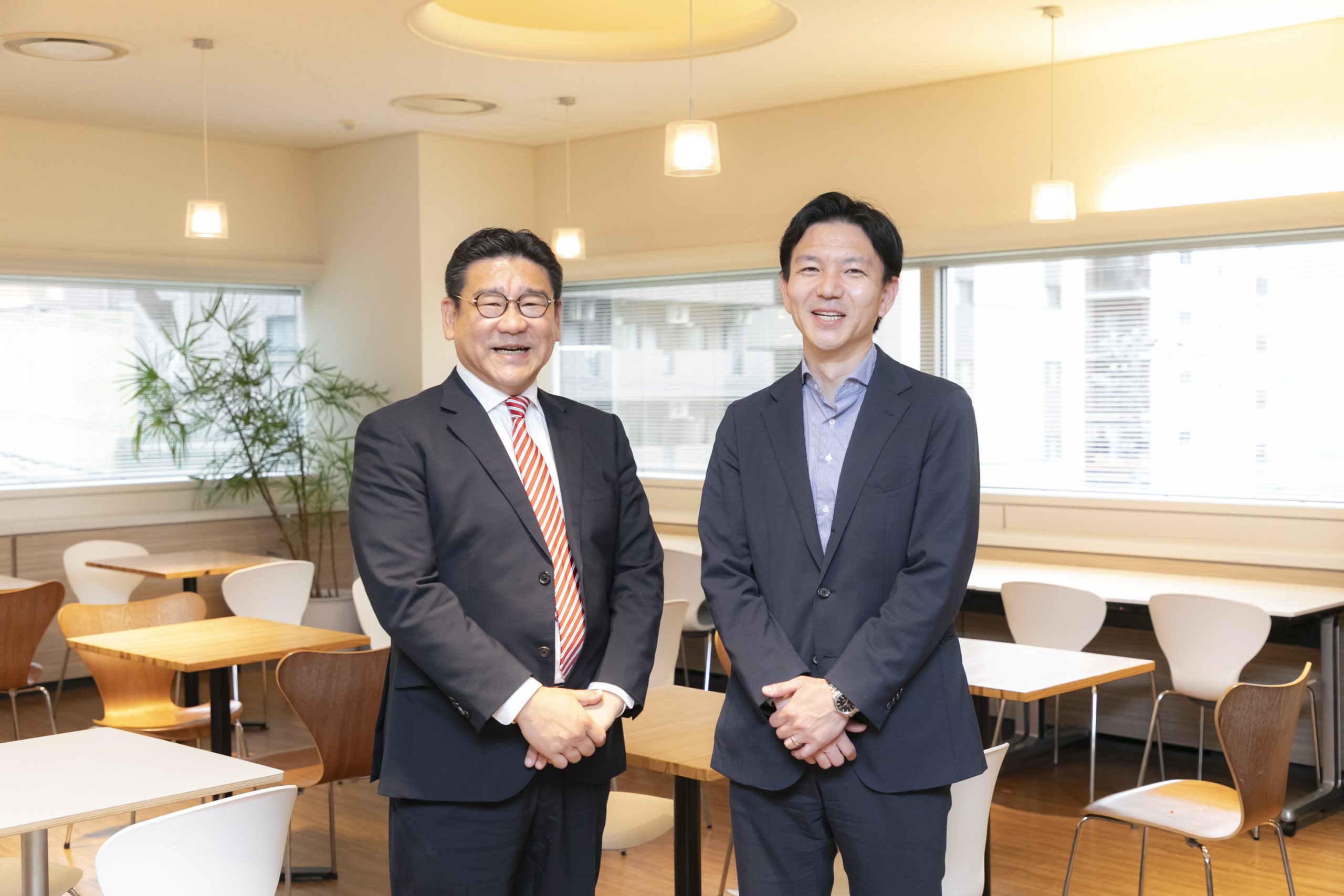
Expanding Sales of Upcycled Bagasse Molded-Pulp Containers — Carving a Path Forward in a New Field


Recently, natural-looking bagasse molded-pulp containers (hereinafter referred to as “molded-pulp containers”) have become increasingly common, and are now used for products such as individual frozen meals and take-out lunchboxes. Made from bagasse pulp — the residue left after juice is extracted from sugarcane — these containers are upcycled products that make effective use of once discarded agricultural products and are resistant to both heat and moisture. On top of this, they can be molded with deep partitions that are difficult to achieve with paper containers. As a result, they are attracting growing attention as a substitute for plastic containers used for prepared meals, including Japanese bento boxes, and other food packaging products.
Since 2022, Japan Pulp & Paper has been importing these molded-pulp containers from China and selling them to manufactures in Japan to be used as frozen food containers. The business is handled by Direct Sales Section III of the Industrial Materials Sales Division.

Industrial Materials Sales Division
Japan Pulp & Paper
Industrial Materials Sales Division
Japan Pulp & Paper
Direct Sales Section III and Its Emergence From the Molded-Pulp Container Business
Direct Sales Section III handles food containers designed for a variety of applications, including yogurt, ice cream, frozen boxed meals and prepared foods, and in-flight meals. The section’s origins, however, can be traced back to Manager Sugimura’s decision to begin handling molded-pulp containers. “Starting around 2015, some of our customers who manufacture and sell food containers were already taking the lead in this area. We believed the containers had considerable potential as an alternative to plastic, so I brought the idea to senior management. While obtaining approval was a major hurdle, it was ultimately accepted, paving the way for the launch of Direct Sales Section III,” recalls Sugimura.
There were good reasons why many people within the company were cautious. The products involve food and direct contact with the mouth, and importing pre-processed containers from outside Japan ― rather than raw materials ― represented a significant departure from Japan Pulp & Paper’s traditional business practices. The company had limited experience handling products that come in direct contact with the mouth, and there were a number of genuine risks ― reputational risk, the risk of product recall if something went wrong, and country-specific political and economic risks. “That said, given the business environment we operate in, we felt it necessary to confront each risk head-on, put appropriate measures in place, and challenge ourselves in new areas such as composite materials aConvinced of the potential of molded-pulp containers, Sugimura worked steadily to mitigate risks one by one and win over those around him.
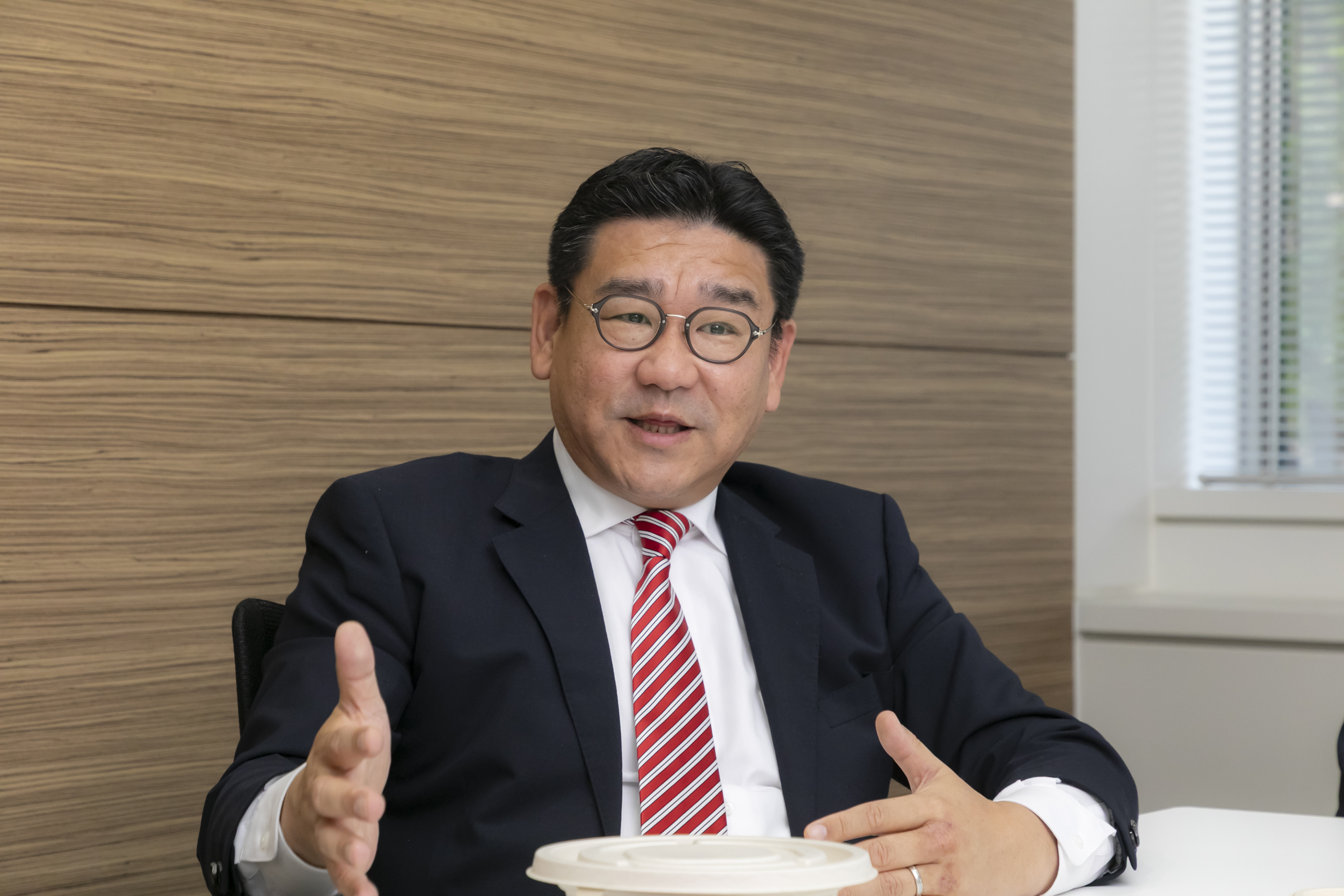
Requiring Strict Quality Control From Suppliers
The molded-pulp containers are imported from a Chinese supplier (molded-pulp manufacturer). Because of the different regulatory requirements in both countries governing food containers, differing perspectives on product quality led to clashes in the beginning. Nevertheless, Sugimura continued to patiently communicate the standards that needed to be met. His first visit took place in 2022 during the COVID-19 pandemic, during which he even underwent a 10-day quarantine in China. Since then, he has made frequent trips to the factory, bringing the total number of visits to 19. “Our supplier operates nearly 100 molding machines, so there are virtually no concerns about maintaining stable supply volumes. The level of quality they are achieving has also improved dramatically ― so much so that the supplier now promotes this within China as one of its main strengths. I also visited with the sugarcane farms that produce the source material for bagasse pulp, and I was able to observe how the sugarcane gets harvested as well as the process of transporting it to the sugar mills,” notes Sugimura.
Quality, which had been inconsistent during the early stages of the product in 2022, gradually improved. By the latter half of 2023, sales volumes had increased and profitability had started to pick up. It was around this time that the business began to gain traction. In terms of quality assurance, Japan Pulp & Paper had worked closely with its container-manufacturing customers and conducted product checks in Japan. Now, however, inspections are outsourced to a Japanese company based in China, enabling a faster response. More recently, AI-powered cameras are being introduced as part of ongoing efforts to further improve accuracy.
-
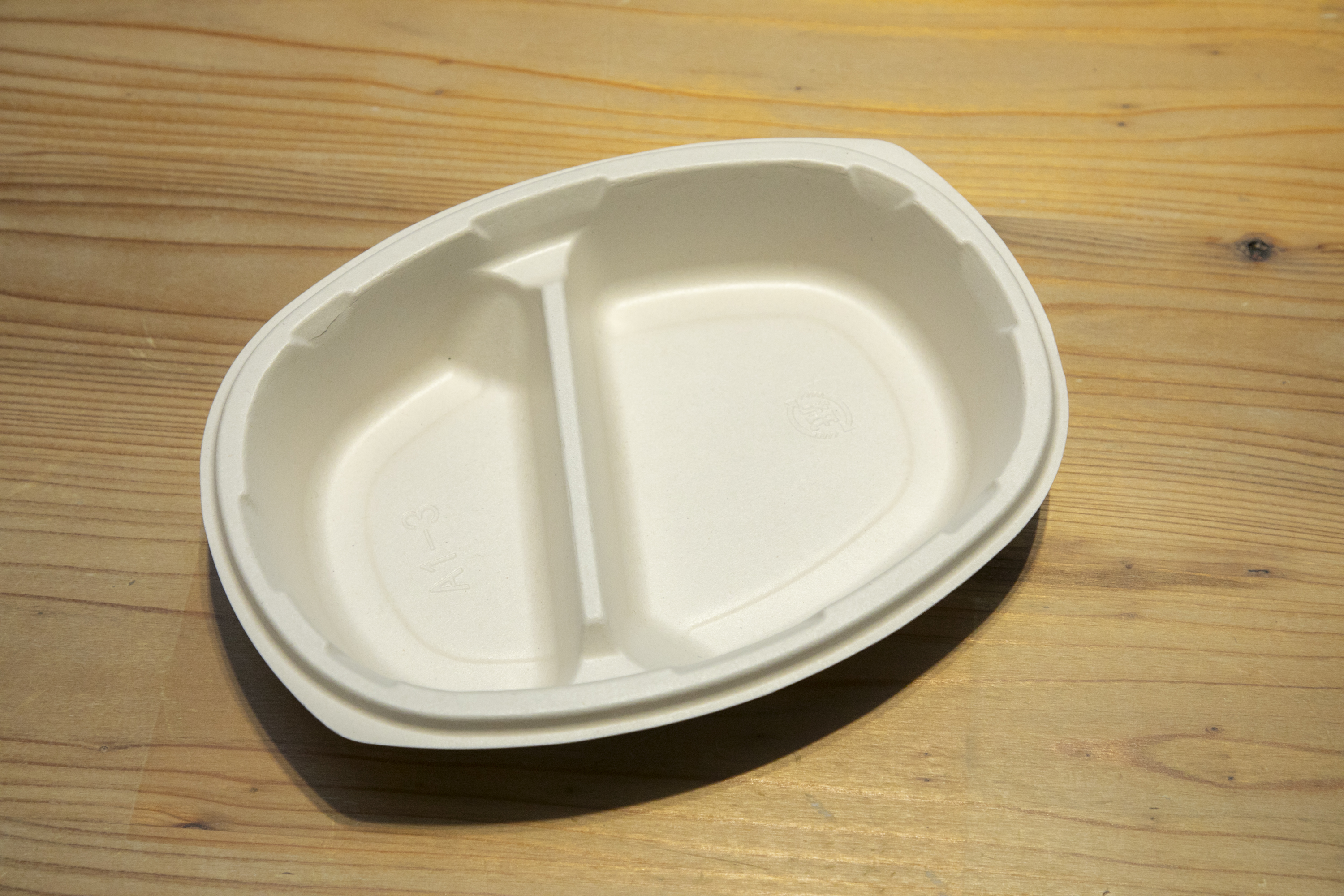 A molded-pulp container imported from the Chinese supplier
 -
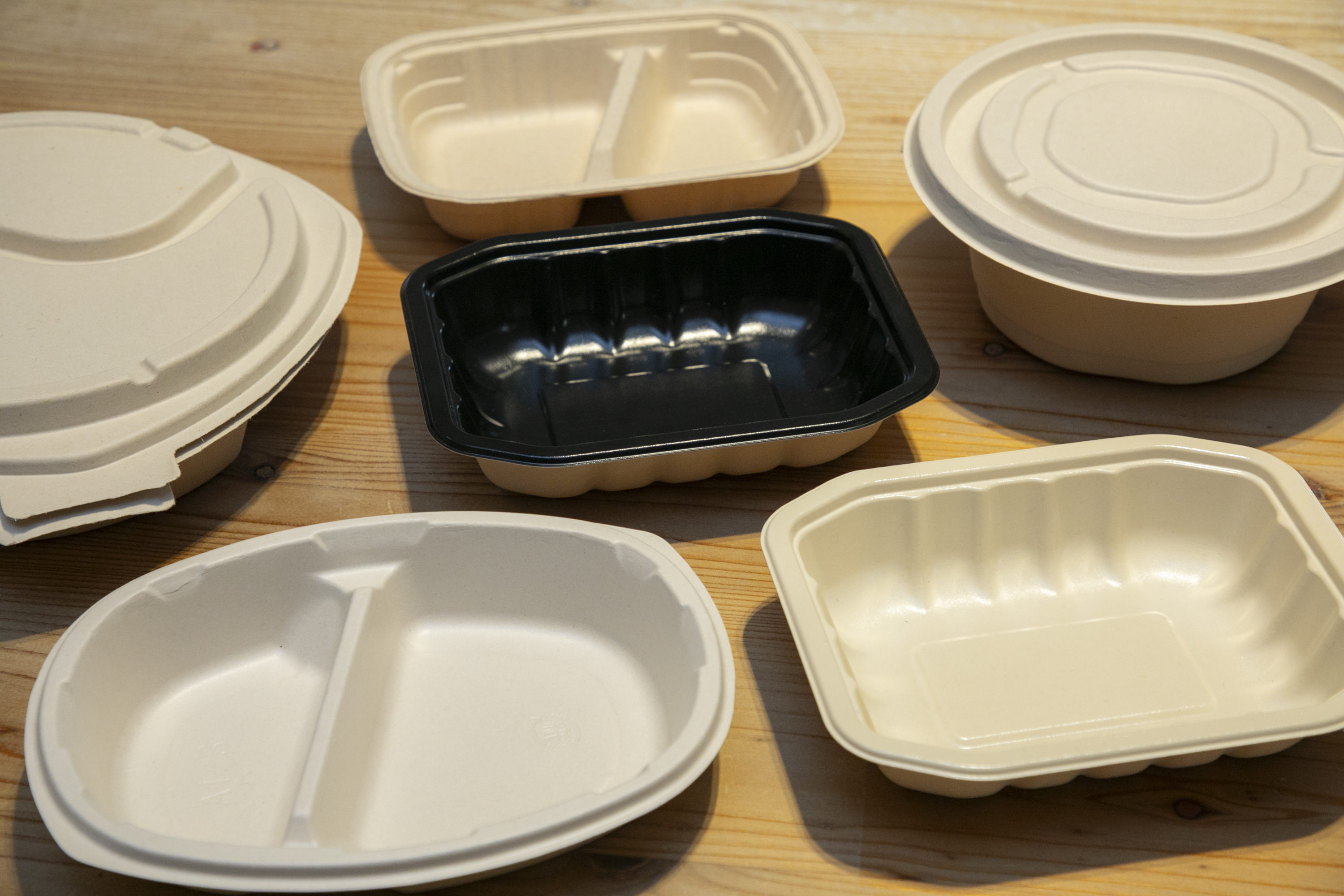 Direct Sales Section III handles molded-pulp containers in a variety of shapes
Continuing to Cultivate Suppliers to Meet Growing Demand
Currently, 1.5 to 2 million individual meal containers are imported each month from the supplier in China, which are then sold to Japanese container manufacturers. These containers are primarily used by major food companies for frozen meal products. Amid growing demand for time-saving and labor-efficient meal preparation, individual frozen meals ― complete meals consisting of a staple food, main dish, and side dishes served in a single container ― are expected to see significant growth in the future. Because the molded-pulp containers are formed using custom-designed molds, the containers can be made with depth and equipped with partitions. They can also be used for both microwave heating and freezer storage and are easy to dispose of, making them particularly well-suited to individual frozen meals.
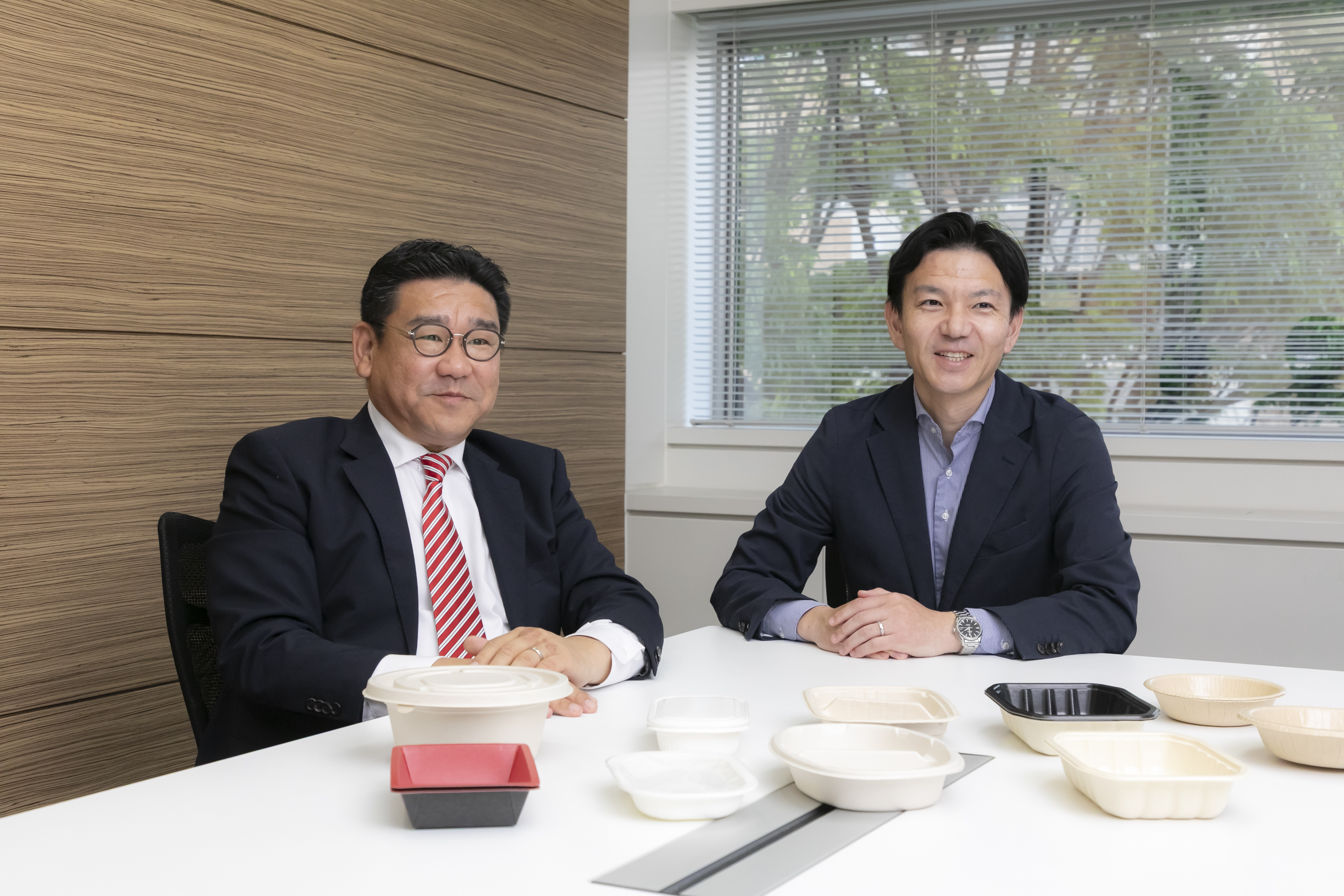
In anticipation of this growing demand, Direct Sales Section III is actively working to cultivate new suppliers. Even though they have built a strong working relationship with their current supplier, the risks of relying on a single country and a single company remain very high. “We are looking mainly in South Korea and Vietnam,” says Sugimura. “The three criteria we focus on are stable quality, stable supply, and cost. Korea poses no problems in terms of quality and supply, but costs there are difficult work with. Vietnam is attractive from a cost perspective, though there are issues with quality and supply. Bridging this gap will be our key challenge going forward.”
Aiming to Expand Supply to a Wide Range of Foodservice Operators
At the same time, the section is proactively working to expand its customer base, including increasing sales to frozen food manufacturers. It expects growing demand for individual meals not only among households, but also at businesses. “We believe that the need for these products will continue to expand in areas such as home deliveries, in-office meal deliveries, and elderly care, and so we intend to keep pursuing new opportunities,” says Nakai, who joined Direct Sales Section III in 2025 and has been making efforts to expand the business.
The cost differential with plastic, which had acted as a barrier to the adoption of molded-pulp containers, is also narrowing rapidly. While initially their cost was about three times that of plastic, efforts such as working to decrease defective product rates have brought the cost differential down to approximately 1.5 to 2 times that of plastic. Although the current economic climate has led some companies to prioritize costs over environmental considerations, companies that actively address environmental issues and those that prioritize brand image are generally receptive. Likewise, eco-minded consumers and those who think the containers look cool and like the texture are helping to drive momentum as well.
Furthermore, beyond its use for food containers, bagasse pulp has potential as a raw material for packaging products destined for the EU, where the Packaging and Packaging Waste Regulation (PPWR) is set to take effect.
Looking even further ahead, Direct Sales Section III has its sights set on developing and introducing molded-pulp containers produced in Japan. “If we can establish a circular business model by promoting production of molded-pulp containers in Japan and collecting and recycling them after use, this could truly become the ultimate eco-friendly material,” says Nakai.
Accumulating Organizational Insights Through New Challenges
The significance of taking on the challenge of a new product like molded-paper containers has been immense. Because the business involves importing and selling pre-processed containers from outside Japan, it required a thorough understanding of raw materials, molding methods, and production processes on a level comparable to manufacturers. The insights they gained from this process of trial and error have become a valuable asset not only for their section but for Japan Pulp & Paper as a whole, and has contributed to the company’s expansion into new areas of business.
In addition, the initiative served as a tangible example of the company’s willingness to take on new business challenges. Explaining why he requested a transfer to Direct Sales Section III, Nakai says: “Seeing Manager Sugimura venture beyond the boundaries of our existing businesses and take on the challenge of developing new businesses helped me see potential in the company’s future and my own career path, which led me to voluntarily request a transfer.”
This is a testament to the environment at Japan Pulp & Paper.
“Having a global procurement and information network ― in combination with our solid existing business ― is one of our group’s greatest strengths. I would like to see us make greater use of this advantage, and I especially want to encourage more young employees to actively embrace new challenges,” says Sugimura.
He also highlights the opportunities for people from diverse backgrounds to thrive. “Until now, our primary focus has been on sales. However, moving forward, it will be essential to have individuals who can think in terms of what kind of product we should be creating, and who come with other perspectives like planning and product development.”For Japan Pulp & Paper, Direct Sales Section III and its molded-pulp container business may well serve as a model for pioneering new business fields.
The information in OVOL Insight is current as of the day of publication.
Please note that information may be subject to change without prior notice.
[Published on July 22, 2026]