- Home
- Sustainability
- Governance
- Roundtable Discussion among the Outside Directors
Roundtable Discussion among the Outside Directors
A strategy of achieving sustainable growth in global markets through DX promotion, developing highly skilled professionals, and sustainable management, based on both offensive and defensive governance
Current State of Corporate Governance: Evaluation and Challenges
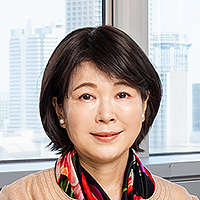
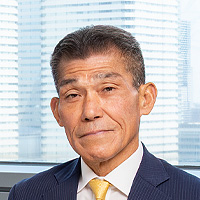
One example of a challenge we faced in recent years was an Antimonopoly Law incident in fiscal 2023 that unfortunately occurred, related to a bidding project, which caused concern among stakeholders. However, I do not believe that this is evidence of the company’s governance structure functioning improperly. Basic governance frameworks, such as internal controls, have been firmly established, and information is shared between management and the outside directors in a timely and appropriate manner. My assessment is that management is sufficiently transparent.
On the other hand, the field of IT governance has become an important issue as the group seeks to respond to rapid changes in the business environment. In April 2025, the company established the Corporate DX Division and entered a critical phase of developing policies and controls for the utilization of AI and other technologies. Additionally, providing resilience against threats such as cyberattacks and large-scale natural disasters has become a pressing issue. As some elements of computer systems are outsourced, it is essential to have defensive measures available in case of an emergency. The group continues to relentlessly expand globally, so group governance that covers operations outside of Japan is more important than ever before.
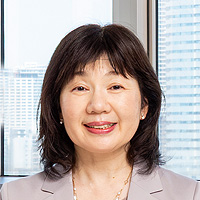
Like Mr. Takahashi, I recognize that groupwide governance that covers IT and sites outside Japan is a continuing theme. By establishing the Corporate DX Division, the company started to make efforts toward visualization on a global scale, and I expect this will result in controls that are strengthened according to actual local conditions. As the number of group companies grows both in and outside of Japan, I am encouraged by the stance of management in seeking to discuss its goals in both offensive and defensive terms. Although the current business results are challenging, the Board of Directors shares a strong determination to closely monitor the situation and take measures to achieve swift results.
Human resources are a key issue related to group governance. In particular, it has become essential for the company to find employees with expert skills rather than generalists. M&As in recent years have resulted in the need for higher capabilities in terms of organizational management, and acquiring and developing international, IT, and other expert personnel has become an urgent issue.
Overall, the company seems to have found a good balance between offensive and defensive governance. The company has been proactively expanding M&As in recent years, mainly outside of Japan, but they have taken an extremely conservative stance toward risk, and they base their actions on very calm and stringent assessments. As I mentioned last year as well, this prudent stance is expressed through the forthrightness and sincerity that forms the core of their corporate culture, and this past year has reaffirmed that this is a strength of the company’s governance. Of course, no matter how much they study or assess issues in advance, sometimes the company will face unexpected business risks. The company should try to become more agile going forward to allow for flexible and fearless course correction when encountering such risks.
The most significant changes over the last year were the company’s major acquisitions in Germany, France, and Portugal. These were difficult projects as we were purchasing bankrupt companies at risk of losing their customers. For this reason, it was vital for the head office to carefully apply controls instead of delegating to local entities. The outside directors strongly requested the establishment of a local governance structure and the construction of a framework that could be led by the head office. Currently, the Board of Directors receives reports every financial quarter that describe results, investment conditions, the progress of the governance structure, and other information, and the board implements appropriate controls.
We recognize that organizational homogeneity, which we identified last year, remains an issue. Although this has some positive aspects, when progress depends on a common understanding as a precondition, it can backfire. President Watanabe is intensely aware of this issue and the degree to which his message on it is permeating the rest of the company. After seeing the president explaining the long-term vision and details about the progress of OVOL Medium-term Business Plan 2026 at the financial results briefing, I was impressed to see how resolutely and clearly all the executives spoke about their own strategies and responsibilities at the General Meeting of All Executives at the end of May. I thought it was very positive how they shared their awareness of issues and outlined specific policies for improvement.
Board of Directors’ Meetings: Operation, Discussions, and Effectiveness
Under the leadership of President Watanabe, who serves as chairperson, the Board of Directors has fostered an atmosphere where it is easy even for outside directors to speak our minds, and overall we actively engage in discussions. Execution and supervision are functioning in an appropriate manner, and I believe that a sound governance environment has been established. To further improve effectiveness, it is important to focus not only on Board meeting resolutions and report items, but also to expand the opportunities for discussion to wider strategic themes that go beyond just the meeting agenda. For example, we are increasingly discussing topics such as how to build and strengthen group governance, how to proceed with logistics reforms as a group, as well as closely related IT governance and other core management themes. I feel that the perspectives that we bring as outside directors in response to these topics can be leveraged to make discussions broader and more engaging.
In our role as outside directors, it is critical that we receive information in advance to allow us to make substantive contributions to board meeting discussions from our various perspectives, and the company has always been very good at doing this. Additionally, operational aspects of these preliminary briefings are improving so that, rather than examining the minutiae of resolutions or agenda items, more time will be spent on gaining broader perspectives, such as what kind of discussions were held among executives. The opinions and questions of the outside directors during the preliminary briefings are diligently provided as feedback for the inside directors and management. Given our limited time and resources, a key strength of the company’s corporate governance is the effective use of time in these preliminary briefings, which serve to efficiently deepen our discussions.
The company is taking other distinctive measures to ensure that discussions at Board of Directors meetings are more substantial, such as timely sharing of information with outside directors about issues prioritized by the Audit & Supervisory Board. The company provides excellent coordination of information, and this has helped make discussions at board meetings more lively.
In the last year, the onsite visits we made to key subsidiaries made a strong impression on me. These were arranged by the full-time Audit & Supervisory Board member as part of her educational activities for outside directors. We had the opportunity to go to Eco-Port Kyushu and several other worksites that we hadn’t had the chance to go to previously. Naturally, one gains a different level of empathy and understanding by actually going to a worksite and seeing conditions with one’s own eyes, and so I think these experiences were very meaningful.
From the perspective of energizing discussions at board meetings, one valid option would be for outside directors to attend the Executive Management Committee as observers. Currently, it is difficult for the outside directors to visualize who, including the responsible executives, made which comments, and what kind of discussions are held before matters are brought before the Board of Directors. My impression is that the process is slightly predetermined and lacking in transparency. I’m particularly interested in discussions that are held between the president and executives in charge. Attending the Executive Management Committee or similar meetings as observers would help us identify the flow of discussions and give us a sense of the real atmosphere at the time, which will not only enable us to understand the topics discussed at the meeting, but will also help us to “get to know” the participants through the stances and approaches of the speakers. This would also be very useful for improving the effectiveness of succession plans. Of course, in my role as a supervisor I must judge carefully how far to enter executive discussions, but I think that depending on the theme, a flexible approach that includes the participation of observers may be a good idea.
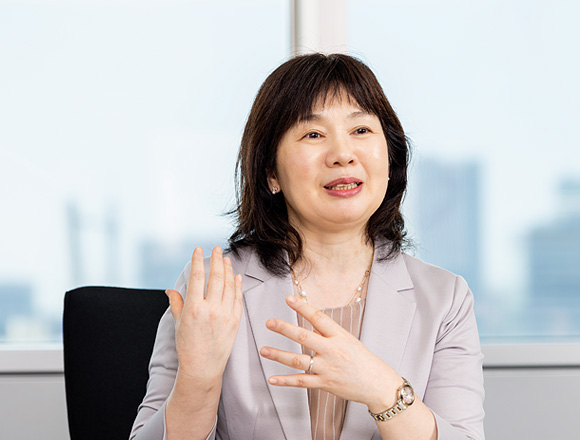
I agree completely. For example, the relocation of the head office is an important project and a subject of high strategic significance. At the same time, it is closely related to soft power such as employee creativity and organizational culture, and I wanted to understand the specifics of how discussions led to this decision and the actual atmosphere of the meetings.
Although they are necessary to comply with the standards for agenda items based on the rules of a company with an Audit & Supervisory Board, sometimes more minor issues are discussed by the board than is ideal. I have offered suggestions for improving this in my role as an outside director. For example, I recognize that introducing measures to further improve agenda setting and meeting operation, such as batch approval of minor matters and detailed reporting on an ad hoc basis for important projects, is a key challenge for the operation of board meetings. Although we have made steady progress on reviewing this issue, I hope we can shift to even more substantive discussions going forward. Conducting flexible and strategic Board of Directors meetings is an issue that needs to be addressed in the future to make discussions even more substantive.
The role of meeting minutes is not only to leave behind evidence of approved matters, but also to help us understand the flow and key points of discussions. It is important to create such records efficiently using tools such as AI. I have heard that such improvements are being considered, and I look forward to seeing future developments.
The General Meeting of All Executives at the end of May that was mentioned by Ms. Takeuchi was established under the guidance of the president as an opportunity for the executives in charge of each department to explain the current conditions of their department, describe the gaps that exist in terms of their progress under the Medium-term Business Plan, and outline the measures that will be taken to close these gaps. This initiative was extremely worthwhile and informative. Going forward, it will be important to continue to have such opportunities for dialogue and information sharing.
A clear theme that emerged at the General Meeting of All Executives was the need to create new mechanisms and measures to close the gap between the current conditions and the targets in the final year of the Medium-term Business Plan. I was reassured to hear specific explanations from each department. At the same time, the Board of Directors needs to gain a firm understanding of how cross-sectional collaboration is actually built, both inside and outside the group, and how the progress of such partnerships is managed and driven forward. The board needs to ensure that it is handling these issues appropriately.
Although this is a tough time for business performance due to market conditions, the company’s earning capacity is in no way inferior to its competitors. In fact, it can be seen as superior. Paper is an integral part of society and there is no likelihood of its complete elimination. I like to think of it as having similar value to other infrastructure that supports our everyday lives. As the president explained at the financial results briefing in May 2025, even if the overall market shrinks, the company should aim to capture a larger share within the market. The company’s policy is not to remain within a specific region, but to expand while maintaining a good balance between global and local business. Based on this policy, the company has been steadily building a system composed of multiple business pillars over the last few years. As the business environment continues to change, having these different pillars will help disperse risk, and I expect that they will reinforce the company’s competitive advantages. In particular, I believe that the difference in earning power between the company and its competitors will prove to be valuable in this context.
Operations of the Nomination and Compensation Advisory Committee
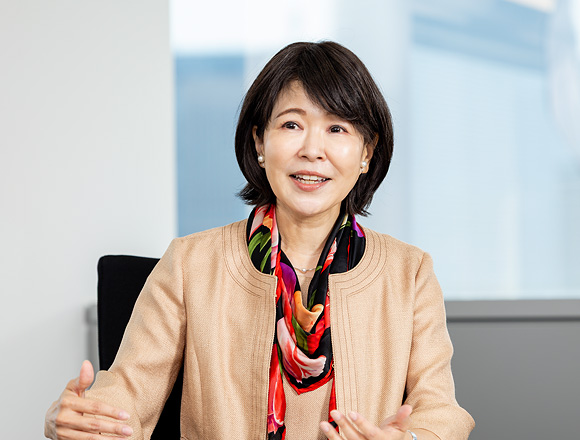
One challenge for the outside directors with regard to the Nomination and Compensation Advisory Committee is the wide dispersal of human resources, especially those based outside of Japan. This makes it rather difficult to evaluate the work styles and vision of each individual, and whether they are people capable of linking their vision to strategic execution. Under these circumstances, I found it extremely valuable, as an outside director and a member of the Nomination and Compensation Advisory Committee, to have the opportunity to directly observe and learn about the character of the executives in charge of each department through the General Meeting of All Executives. Going forward, it is important for outside directors to create more opportunities, like these onsite tours, to help us increase our knowledge. Nevertheless, the fact that the current executive structure has remained unchanged for several years is an issue overall. If structural changes do become necessary in the future, major changes will be inevitable, and the risks involved in this should be kept in mind. This concern has been repeatedly discussed at the Nomination and Compensation Advisory Committee and the president and other managers are fully aware of the issue. In this sense, I felt that the discussions at the committee were very worthwhile.
On the topic of the succession plan for the Board of Directors, the Board is still in the early phase when it comes to specific considerations, but the issue continues to be recognized as important. At the Nomination and Compensation Advisory Committee, the president outlined the kind of human resources he expects will be needed for future management structures born from DX, overseas expansion, and other initiatives, and how he intends to develop them. I was able to hear directly about these ideas and the company’s awareness of the issues relating to them. Such dialogue provides an excellent opportunity to create the foundations for building a succession plan.
The contents of the materials provided at the Nomination and Compensation Advisory Committee have been further improved since last year and are excellent. Not only has information about the current directors been organized conscientiously, but certain information about potential leading candidates is also provided, an approach similar to succession planning. Currently, a comprehensive succession plan that covers, for example, the entire management team including the general managers of divisions, has not yet been established. I see the development and selection of managerial human resources from a medium-to longterm perspective as a major challenge going forward.
When it comes to the officer compensation system, since corporate results in recent years have been greatly affected by overseas market conditions, I feel the time has come to consider revisions to the system design to make it more flexible and finely tuned. I understand, however, that this requires deeper discussions as we move forward. As a slight digression, I believe the launch of a stock reward system as a means of incentivizing employees is a very significant development. Turning employees into shareholders, including those who previously did not have any holdings in the company, should increase engagement as employees conduct their daily work with a shareholder viewpoint, and this system design is desirable from the perspective of human capital management as well.
The officer compensation system was designed with reference to outside survey data, and overall I think its benchmarks are appropriate. However, the performance-linked portion of remuneration is based on the officer’s position, and is decided only by the rate of increase/decrease in consolidated ordinary profit, a structure that I believe has issues that need to be addressed. Revising the design to reflect more multi-faceted indicators and other contributions is an issue that needs consideration going forward.
Deepening Sustainable Management
Although the ideals surrounding ESG and sustainability are facing an adverse climate at the moment, this does not fundamentally change “what needs to be done.” To date, companies have tended to be “vision driven,” and those that put out big ideas were highly praised regardless of whether or not they were put into practice. For example, in terms of climate change, there was a race to bring forward targets for achieving carbon neutrality, but this had the disadvantage of binding companies to overly ambitious targets that diverged from reality. Currently, the company emphasizes the theme of “realistic transition” and it seems to me like we have entered a new phase that prioritizes effective initiatives. A major strength of the company has been to keep its feet firmly on the ground and take steady, substantive actions without getting carried away by the fashionable trends of the day. This is a praiseworthy stance. How to proceed to the next stage and how to create a better future are questions that I am confident the company will be able to answer in its own unique way. As an expert in the energy and environmental fields, I will continue to give the company my full support by providing my outside perspective.
I want to fulfill my supervisory role as an outside director by closely monitoring the progress of OVOL Medium-term Business Plan 2026. At the same time, I will continue to carefully monitor not only human capital management that aims to raise the engagement of the human resources who support the company, but also sustainable management that necessitates proactive initiatives as a group involved in the paper business. These are key management pillars of the company. I expect in-depth discussions to be held on how to describe the growth story of the company with more clarity and communicate it externally. The company is a B-to-B business and is not widely known among regular investors, so the company has started to make efforts to promote IR targeting individual investors. Such initiatives are important to ensure more people understand the value of the company and its role in supporting society by expanding paper-focused business areas. Personally, I will continue to offer my outside perspective to support the company in refining its processes on its road to becoming a “trustworthy and engaging partner” as set out in its long-term vision.
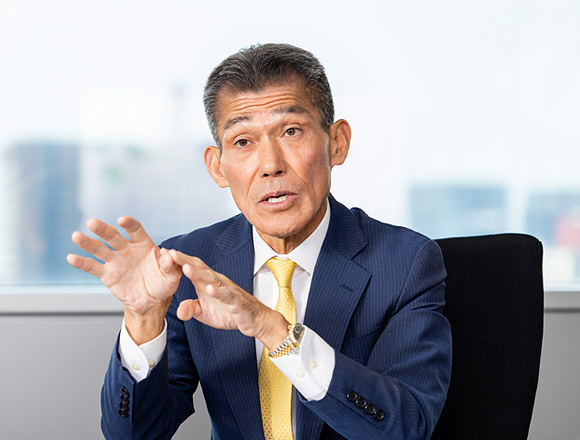
Various keywords such as human capital management, well-being management, and sustainable management are currently used in the context of management issues. These do not exist in isolation, but rather they are all connected organically. Ultimately, the most important element is the employees, and strengthening human capital management will improve the health of each employee both physically and mentally, resulting in well-being management that achieves high levels of social satisfaction. This leads to sustainable management that enhances the sustainability of the company, which then increases corporate value, giving rise to a virtuous circle. Going forward, clearly communicating that we foster such values and specific initiatives both internally and externally will become ever more important. The company has 180 years of history, and from the outside it may seem to be a specialist trading company focused on paper and pulp that is easily impacted by changes in market conditions. But in reality, it is a team of multiple companies that is expanding as a group across a wide range of businesses, including paper manufacturing and processing, wastepaper and waste plastic collection, and even the power generation business. The company is also actively transforming its business portfolio as it seeks to become a “trustworthy and engaging partner” that achieves high levels of satisfaction among its various stakeholders. Raising broader awareness of such realities and initiatives will play a critical role in increasing corporate value. As a significant step toward achieving this, the president took the stage at an individual investor briefing that was held for the first time this year. I would like to see improved IR and SR activities in the future, and as outside directors, we will proactively engage in dialogue with investors as necessary and clearly communicate the initiatives and appeal of the company to the outside world in order to raise corporate value.
Sustainability